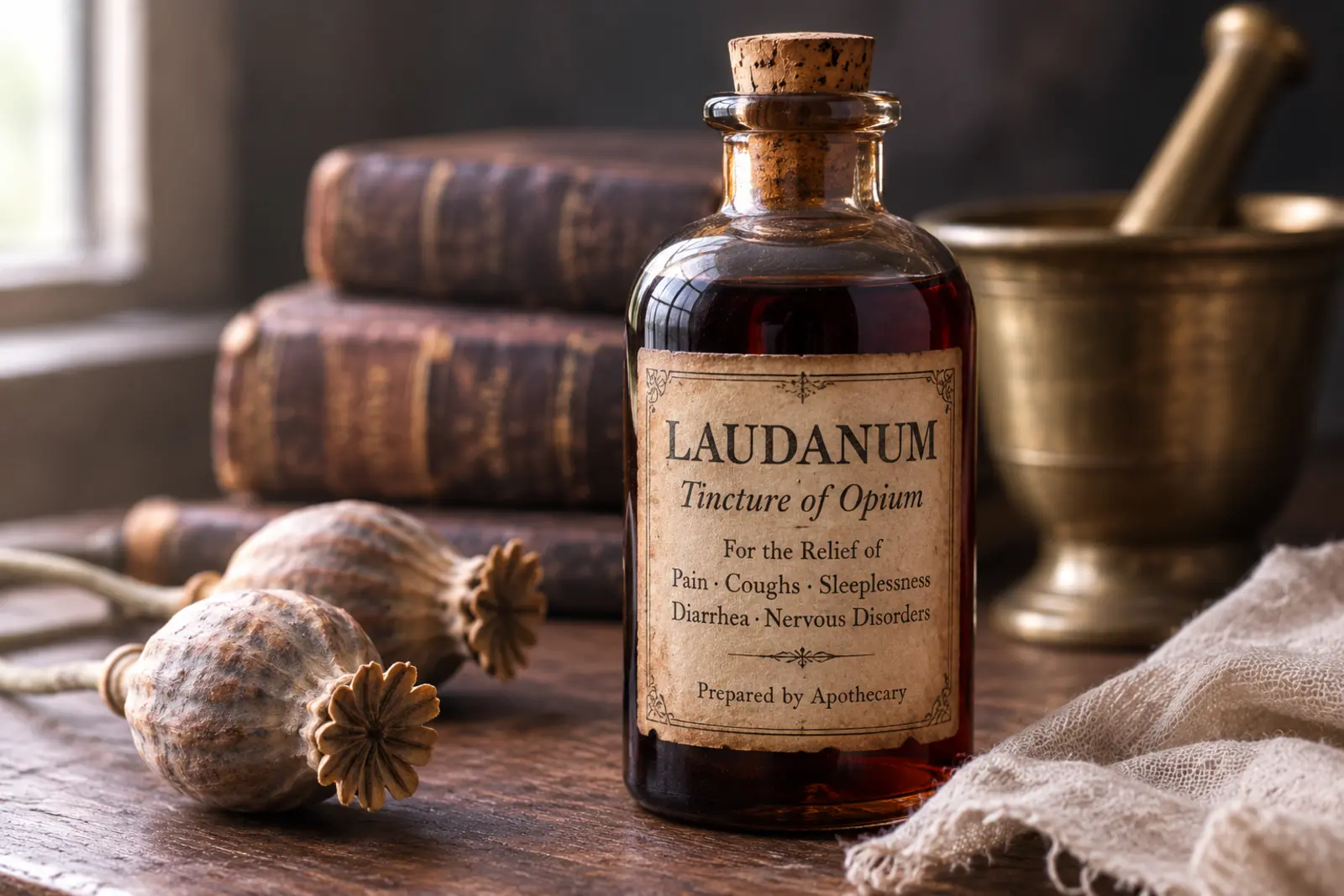
What is Laudanum?
Laudanum is one of the oldest prescription opioids used in Western medicine. It is a liquid medicine made up of very potent painkillers and alcohol that was first developed in the 1500s by Theophrastus von Hohenheim, better known as Paracelsus, a Swiss-German alchemist.[2]
Laudanum is a tincture of opium, containing several compounds, most notably morphine and codeine, which were dissolved in alcohol so they would remain intact and can be stored long-term.[3]
It is classified as an opioid, and like other opioids, produces pain-relieving and sedative properties and affects the same brain and body receptors as all other opioids such as oxycodone and codeine.[4]
What is Laudanum Made From?
There are two primary components to laudanum: opium extracted from the poppy plant (Papaver somniferum) and an alcohol that serves as a solvent and preservative for the solution.[5]
Many historical recipe books added additional ingredients such as saffron, cloves, and cinnamon. Most of these were added for their flavor and preservative qualities, since laudanum’s taste was described as very bitter, but may have been believed by some apothecaries to enhance the medicinal value of the solution.
The modern pharmaceutical tincture of opium is much more standardized than the home remedy solutions and is produced using strict manufacturing standards and does not include those additive spices.[6]
What Were Doctors Using Laudanum For?
Historically, doctors used laudanum for many different medical purposes. Many of these medical uses occurred because there weren’t many treatment options available for patients’ medical needs.
The uses for laudanum included:
- Pain Relief: To treat acute injury; post-surgery; and chronic pain.
- Relieving Coughing: To relieve persistent coughing, particularly from tuberculosis and other serious respiratory illnesses.
- Diarrhea: To treat diarrhea, including dysentery and other severe gastrointestinal illnesses.
- Sleep Disorders: To manage insomnia, anxiety, and other conditions that interfere with sleep.
- Women’s Health Issues: To relieve menstrual cramps and reduce discomfort during labor.
Historically, laudanum was also used to soothe crying babies. Though this practice was not considered dangerous then, today we recognize this as a very hazardous practice for babies due to their susceptibility to the side effects of the opioids, such as sedation and breathing-related issues.[7]
Why Was Laudanum So Popular in the 1700s and 1800s?
In addition to the limited availability of other pain medication, the fact that laudanum did not require a doctor’s prescription allowed people to purchase it easily. It was also cheap enough that most households could afford it. Laudanum was easily available in general stores and pharmacies up through the 19th century, much the way over-the-counter products like Tylenol and cough syrup would be today.
Many doctors actually believed the benefits of laudanum outweighed its risks, and included laudanum in many over-the-counter patient medicines that they promoted to treat various ailments. As a result, laudanum became a staple product in almost every home in Europe and America.
Some examples of products sold as remedies with laudanum in them include: headache remedies, toothache remedies, cholera remedies, cough remedies, diarrhea remedies, menstrual pain remedies, and remedies for “nervous” conditions, such as anxiety.
The Side Effects of Laudanum

Due to the presence of both alcohol and opium within laudanum, the side effects may vary anywhere from mildly negative to potentially fatal.
Mild side effects:
- Drowsiness and excessive sleepiness
- Constipation
- Nausea and vomiting
- Dizziness
- Confusion
Severe side effects:
- Respiratory depression
- Overdose
- Fainting
- Coma
- Death
It should be noted that the alcohol present in laudanum can enhance the level of impaired judgment and make it harder to determine when you are taking too much of the opium contained in the mixture. When these two are combined, they increase the potential for misjudging a “safe” dose of this substance, making it even more of a threat to health and wellbeing.
Laudanum’s Availability and Misuse
The widespread availability of laudanum also led to increasingly prevalent cases of addiction, as did other factors such as multiple doses given to patients over extended periods of time, patients developing tolerance, and discomfort from withdrawal.
Accidental overdosing was common enough that, even with minimal knowledge of the long-term effects of laudanum and the dangers of opioid addiction, some doctors of the era did raise concerns about its use.[8]
Chronic Use and Accidental Overdosing
Doctor prescription patterns and the general availability of laudanum in nearly every home created opportunities for patients to become dependent on the substance before they even realized what was happening.
Several famous authors wrote about their experiences using laudanum, and their works provide some insight into how this drug affected their lives.
What Caused Laudanum to Be Discontinued?
A number of factors contributed to laudanum’s loss of popularity.
More accurate control over pain was achieved through the development of pure morphine, which was soon followed by other new opioid drugs. There was also a greater awareness of the dangers of laudanum as doctors and the public gained a better understanding of addiction and the dangerous effects of uncontrolled substance use.
Stronger regulations on prescription drugs and modern controlled substance legislation also contributed to laudanum’s decline.[9] The early 20th century also saw a drastic reduction in over-the-counter sales of opioids, moving them from easily accessible general store shelves to tightly regulated pharmacies that required a doctor’s prescription.
Is Laudanum Still Available for Prescription Today?
Many believe that laudanum is a thing of the past, but there is a modern version of it still available.[10] However, it is much different than the household remedy of the 1800s. Modern laudanum is now rarely prescribed by doctors, strictly regulated, manufactured much differently, and more safely than historical laudanum.
When prescribed, it’s typically used to treat severe refractory diarrhea (watery or loose stools lasting weeks or months) or off-label for other specialized medical situations that require close supervision
Laudanum vs. Opium vs. Morphine
These three drugs are often confused, but though they were all used historically for pain relief, they aren’t the same thing.
| Substance |
Source |
What It Is |
Modern Use |
| Opium |
Poppy plants |
Raw material |
Rare medical use |
| Laudanum |
Opium + alcohol |
Liquid tincture |
Very limited |
| Morphine |
Purified opiate |
Individual drug |
Common hospital pain medication |
Understanding these differences can help clear up confusion for anyone researching opioid medications or trying to make sense of historical references to these substances.
Can a Person Develop an Addiction With a Prescription?
Yes. Even if an individual is using their prescription medication as directed by their doctor, dependence can occur with long-term use.[11] There are several factors which may affect how likely an individual will become addicted to a prescribed opiate, including:
- Amount of dose given
- Length of time an individual uses the prescription medication
- Individual medical history
- Family history
When stopping any prescription medication containing opioids, always do so under the direct supervision of a health care professional. This method allows the doctor to assist in tapering down the dosage while minimizing discomfort from withdrawal symptoms.[12]
Conclusion
Laudanum was one of many treatments doctors had during the early days of medicine to provide comfort to patients.
It provided pain relief for various forms of pain, including stomach issues, coughing, and menstrual issues. However, due to its high addictive potential and possible fatal overdoses, laudanum was eventually regulated and replaced with safer alternative medications. The history of laudanum provides valuable lessons about the way in which doctors have been able to treat patients for chronic pain over the years, and also the need for all doctors to prescribe evidence-based prescriptions to minimize addiction and dependency.
If you find that your relationship with opioids is becoming something that is hard to control, help is available. Reach out to Alpas and speak to one of our compassionate admissions specialists. They can walk you through your options and help you take the first step.