
Track Marks: What Are They and What Causes Them?


What you will learn
- Track marks are signs of IV drug use; individuals who use drugs intravenously use needles to inject drugs into their veins, causing puncture wounds and other injuries to the skin.
- Track marks are lines on the skin that may appear reddish in color and could include scars, scabs, skin discoloration, and/or abscesses.
- Drug users often try to hide track marks by wearing long sleeves or injecting drugs in areas of the body not often seen in public, such as the stomach, feet, or groin.
- Track marks are most commonly seen on the inside of the arms, but could also be present on the neck, hands, fingers, toes, feet, groin, stomach, or underarms.
- The direct risks of track marks include constricted blood flow, blood clots, skin infections, and collapsed veins.
- Other health risks associated with sharing needles include serious and life-threatening infections such as HIV, Hepatitis B, and Hepatitis C.
- Some of the most commonly injected illicit drugs include methamphetamine, heroin, and cocaine.
- Prescription opioids and stimulants are often abused by IV administration.
- Signs of a substance use disorder include drug cravings, unsuccessful attempts to stop using drugs, and withdrawal symptoms when abstaining from illicit substances.
- Recent statistics reveal that those who smoke or inject drugs are at a higher risk of a potentially fatal overdose.
- Signs of an overdose may vary by the type of drug, but could include clammy skin, dilated or constricted pupils, slowed breathing, seizures, confusion, and unresponsiveness.
- In the case of an opioid overdose, administer naloxone to reverse the effects of the overdose, and then call 911.
Track marks are caused by punctures to the skin related to intravenous drug use, such as heroin use, opioid drug abuse, and cocaine use. Repeated or long-term IV drug use may cause more severe track marks. If you notice track marks on someone you care about, you may consider urging them to seek substance use treatment as soon as possible. IV drug users may be at an increased risk of substance use disorder and/or a life-threatening overdose.
What Do Track Marks Look Like?
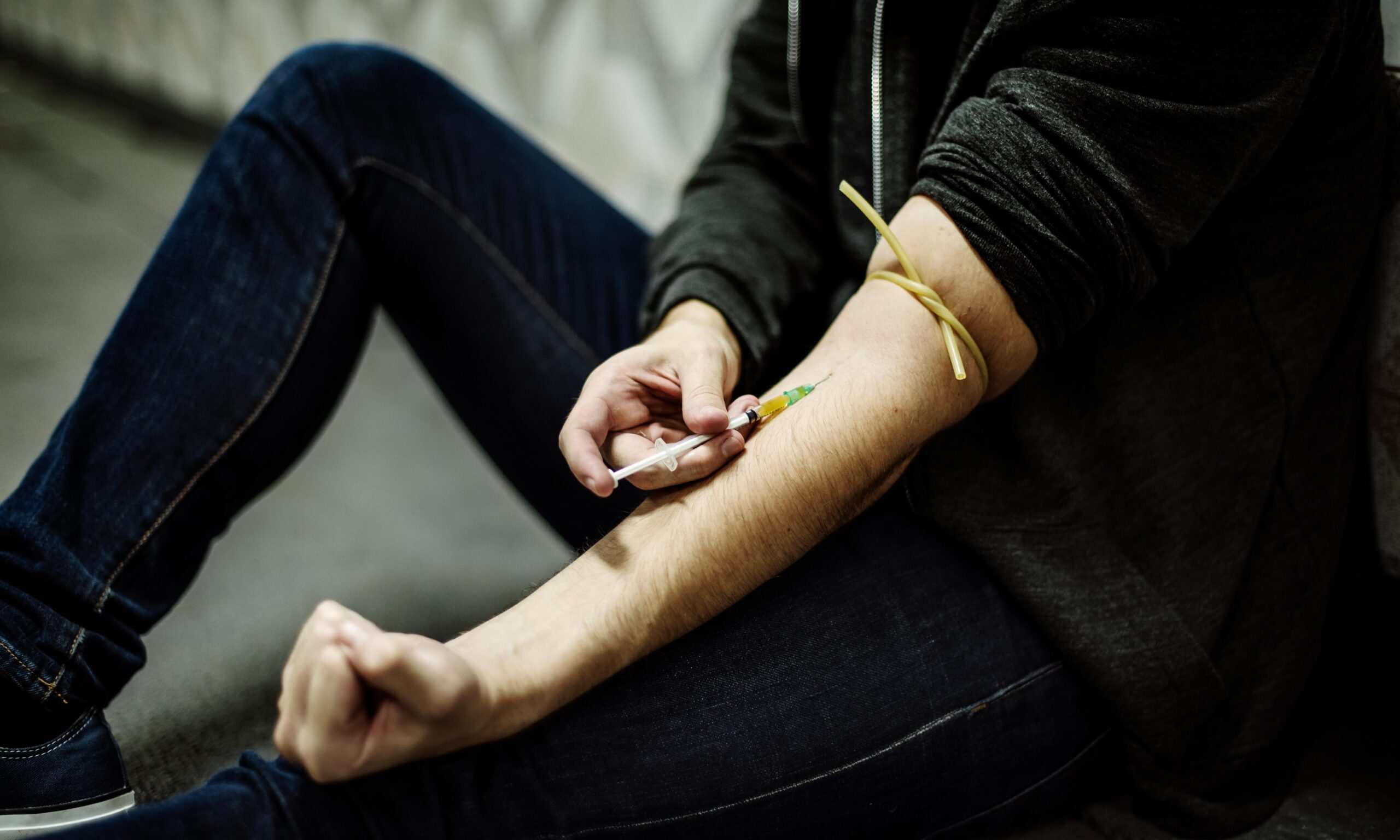
Track marks are minor injuries to the skin caused by intravenous drug use. They may look like red lines running alongside veins and are characterized by puncture marks around the injection site and possibly small scabs and scar tissue. Sometimes, you may see clusters of puncture wounds in the same body area.
Track marks are most commonly seen on the arms, but they also appear in other areas, especially for chronic drug users. After injecting needles in the same area, damage occurs to the skin and veins. This can make it too painful or even impossible to continue injecting in the same area. [1] Some individuals may prefer to inject in areas where they feel it will be less conspicuous.
Over time, track marks can lead to abscesses, skin infections, and other lesions from repeated injections. If you have a loved one who has become involved in IV drug use, they may wear long sleeves in the summertime or take other measures to cover up track marks or puncture wounds.
Where Are Track Marks Located?
Track marks may be most common on the arms, but there are other parts of the body that may be affected as well. These may include:
- Legs
- Feet
- Groin
- Neck
- Fingers
- Elbows
- Stomach
- Underarms
The Real Dangers of Track Marks
Although the superficial wounds associated with track marks can be minor, they point to a larger problem. People who engage in injection drug use are at risk of life-threatening conditions, including substance use disorders, vein damage, drug overdose, and serious health risks like Hepatitis C and HIV.

Direct Risks of IV Injections
Repeated injections of needles into the skin can cause more than just puncture wounds. Over time, this dangerous practice can lead to health complications like: [2]
- Impaired blood flow
- Blood clots
- Collapsed veins
- Permanent skin discoloration
- Ulcers
- Skin infections
- Deep vein thrombosis
Risks of Sharing Needles
IV drug users are known to share needles, which can pose serious health risks such as: [3]
- Hepatitis B
- Hepatitis C
- HIV
Risks of Substance Abuse
Substance abuse and drug addiction are very real threats to people who use illicit substances intravenously. While any type of drug use is risky, IV drug use is associated with quicker and more powerful effects, increasing the risks of adverse effects like addiction and overdose.
What Types of Drugs Are Used Intravenously?
Many types of drugs can be administered intravenously. Some common IV drugs used recreationally include: [4]
- Methamphetamine
- Heroin
- Cocaine
- Prescription opioids
- Prescription stimulants
These drugs happen to be some of the most addictive substances available, which only increases the long-term risks for IV drug users.
Signs of Substance Use Disorder
The appearance of track marks is a clear sign of drug abuse that shouldn’t be ignored. If a loved one has track marks, there’s a good chance they also have a substance use disorder (SUD). Signs and symptoms of SUD include: [5]
- Intense cravings for a particular drug
- Spending a lot of time getting drugs, using drugs, or recovering from their effects
- Using substances repeatedly, even if they’re causing problems at home, school, or work
- Using drugs in risky or dangerous situations (e.g., driving under the influence)
- Giving up other activities to use drugs instead
- Trying unsuccessfully to stop using a drug or cut back on use
- Having trouble limiting the amount of the drug you use or the duration of use
- Needing increasingly higher doses to achieve the same effect (i.e., building tolerance)
- Continuing to use the drug even though it’s exacerbating a physical or mental health condition
- Experiencing withdrawal symptoms when abstaining from the drug for a period of time
According to the Diagnostic and Statistical Manual of Mental Disorders, Fifth Edition (DSM-5) published by the American Psychiatric Association, just two or more of the symptoms above could indicate a substance use disorder that requires treatment.
IV Drug Use Overdose
The risk of a fatal drug overdose is higher for those who inject drugs or smoke them versus other methods of administration. [6] If a loved one is injecting illicit drugs, it could be crucial to know the signs of an overdose. Since different types of drugs are injected, overdose symptoms can vary. Some common overdose symptoms include: [7]
- Vomiting
- Diarrhea
- Change in pupil size
- Cold, clammy skin
- Limp limbs
- Severe drowsiness
- Unresponsiveness
- Shortness of breath
- Raspy breathing
- Paranoia
- Slowed heart rate
- Blue lips or fingernails
- Trouble speaking
- Snoring or gurgling noises from the mouth
- Blurry vision
- Severe weakness or faintness
- Seizures
- confusion
If a loved one is experiencing any of the signs above, call 911 immediately. This is a life-threatening emergency.
What to Do in Case of a Suspected Overdose
If you know what type of drug your loved one is taking and have an antidote like naloxone (for opioid overdose) available, administer it first and then call 911. Other things to do in the case of a suspected overdose can include: [8]
- Stay with the person; don’t leave them alone, even for a short period of time.
- Try to keep them sitting upright, or roll them over so they don’t choke if they start vomiting.
- Don’t ask the person to try to walk or move them.
- Try to determine what type of drug and dosage were taken.
Addiction Treatment Is Available
IV drug use is a serious matter that demands immediate attention. People who use drugs intravenously may be at an even higher risk of adverse and even fatal consequences compared to other drug users. If a loved one has track marks or is showing other signs of IV drug use, this can be a frightening situation for everyone involved.
You don’t have to face it alone, though. Trained substance use and rehabilitation counselors are available to offer empathy, support, and most importantly, evidence-based treatment to promote long-term recovery.
Ready to get help for you or a loved one? Contact us
Editorial Guidelines At Alpas Wellness
To ensure accuracy and quality, every contributor to the Alpas Wellness resource library undergoes a thorough evaluation of their experience, credentials, and achievements prior to publication.
Frequently Asked Questions About Track Marks
Do track marks ever go away?

It depends. Severe track marks from long-term or repeated IV drug use are likely to be permanent. There are some dermatological treatments, cosmetic procedures, and ointments that can minimally improve the appearance of old track marks.
What are track marks in medical terms?
Medical professionals may refer to drug track marks as venipuncture wounds or injection site scars.
What are some other names for track marks?
You may hear track marks referred to as:
- Tracks
- Needle marks
- Needle scars
- Injection marks
- Injection scars
- Puncture marks
- Puncture scars
How can you treat or conceal track marks?
The first step is to stop intravenous drug use immediately. After you’re sober, you can consider skin grafting, tattoos, or makeup to cover track marks.

[1] [4] Minnesota Department of Health. (2026, March). Opioids and injection drug use: Risks, track marks, and harm reduction. https://www.health.state.mn.us/communities/overdose/harmreduce/inject.html
[2] Cornford, C., & Close, H. (2016, June). The physical health of people who inject drugs: Complexities, challenges, and continuity. The British journal of general practice : the journal of the Royal College of General Practitioners. https://pmc.ncbi.nlm.nih.gov/articles/PMC4871283/
[3] Wang, S.-C., & Maher, B. (2019, December). Substance use disorder, intravenous injection, and HIV infection: A Review. Cell transplantation. https://pmc.ncbi.nlm.nih.gov/articles/PMC6923556/#section3-0963689719878380
[5] What is substance use disorder?. Cleveland Clinic. (2025aj, July 7). https://my.clevelandclinic.org/health/diseases/16652-drug-addiction-substance-use-disorder-sud
[6] Centers for Disease Control and Prevention. (2024a, February 15). Routes of drug use among drug overdose deaths – United States, 2020–2022. Centers for Disease Control and Prevention. https://www.cdc.gov/mmwr/volumes/73/wr/mm7306a2.htm
[7] [8] Overdose symptoms: What are signs of a drug overdose? – goodrx. (n.d.-z). https://www.goodrx.com/conditions/substance-use-disorder/signs-symptoms-drug-overdose