Some people wonder how long Xanax stays in the body for understandable reasons. Some are taking it as prescribed for anxiety, others are concerned about side effects, safety, or an upcoming drug test. Questions like these are common, and seeking clear information is a responsible step. To help you get some answers, we’ve compiled the information below.
This article is for educational purposes only and cannot replace guidance from a qualified healthcare provider.
Quick Answer: How Long Does Xanax Stay in Your Body?
What “Stay in Your Body” Can Mean
When people ask how long Xanax stays in your body, they are often referring to two different things. One is how long the medication’s effects last, such as sedation or anxiety relief. The other is how long a drug test can detect the drug or its byproducts. These timelines are not the same and should not be used interchangeably.
Half-Life Explained
Half-life is the time required for the concentration of an active substance in the body to decrease by half. This is an evidence-based concept used in medicine to understand drug metabolism [1], which is how the body processes and clears medications.
Xanax is the brand name for alprazolam (available as oral tablets, oral disintegrating tablets, and oral solution). It is a benzodiazepine typically prescribed for short-term management of severe anxiety and panic disorders. The United States Food and Drug Administration (FDA) reports an average half-life [2] of about 11.2 hours for alprazolam in healthy adults, with a documented range of roughly 6.3 to 26.9 hours. Because it typically takes about four to five half-lives for most of a drug to leave the body, alprazolam can remain for several days in some people.
A Simple Estimate Framework
Using half-life math, many adults will clear most alprazolam from the body within about two to three days. However, this is only an estimate. Clearance may take longer in older adults, in people with liver disease [3], or when alprazolam is taken together with other medications that slow drug metabolism. This estimate does not guarantee drug test results and should not be used to predict screening outcomes.
Detection Periods for Alprazolam
Typical Detection Windows
Detection times vary depending on the testing methods used and individual factors.
| Test type |
Typical detection window |
Can be longer if |
| Urine |
Up to 3 to 4 days |
Ongoing or heavy use, slower metabolism |
| Blood |
About 1 to 2 days |
Higher doses, liver impairment |
| Saliva |
About 1 to 2 days |
Frequent dosing |
| Hair |
Up to 90 days |
Long-term or repeated use |
Alprazolam addiction-focused medical resources consistently report that urine testing detects Xanax longer than blood tests or saliva, while hair testing reflects much longer-term exposure.
What Tests Actually Detect
Many standard urine drug screens do not look for alprazolam specifically. Instead, they screen for the benzodiazepine drug class [4] and then confirm results by more specific methods. Screening tests are designed to be sensitive, while confirmation tests are more specific and used to verify results.
How Long Will Xanax Stay in Urine?
Typical Urine Timeframe
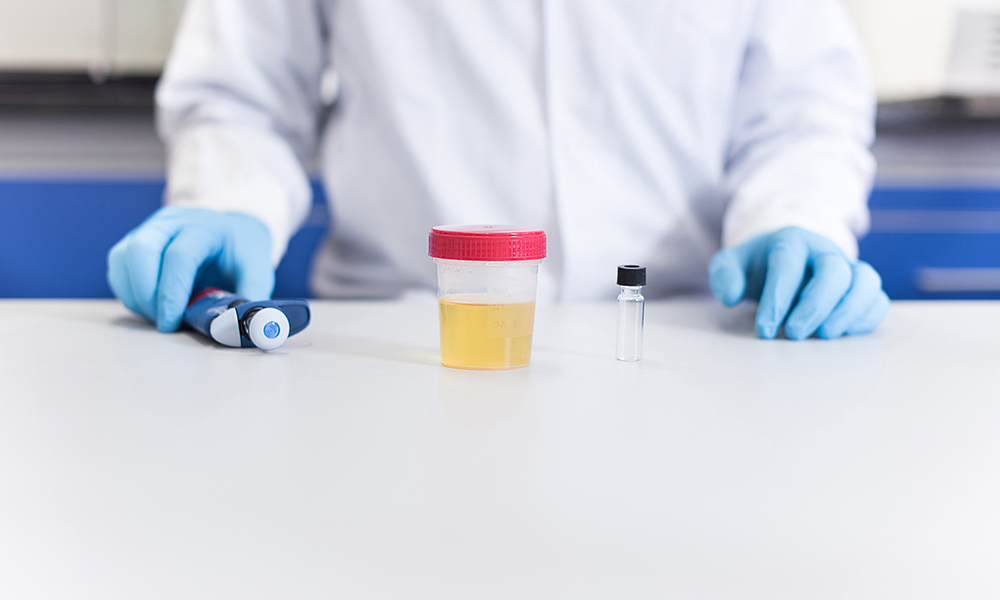
There is a great deal of variability [6] regarding how long alprazolam remains in the urine of any individual, depending upon personal characteristics; therefore, it is tough to accurately predict how long alprazolam will remain detectable in any person.
For many individuals, alprazolam may be detected in urine for up to three or four days. Some people may test positive for a shorter or longer period, depending on how their body processes the medication. Ongoing daily use often leads to longer detection times because the drug can accumulate in the body.
What Makes Urine Detection Longer
Here’s a summary of some common factors that impact how long alprazolam will remain detectable in the urine of any individual:
- Daily/long-term use versus one dose only
- Higher prescribed dosage may result in detection for a more extended period of time
- Age – older adults tend to have slower metabolisms for most medications [1], including alprazolam (i.e., younger individuals usually metabolize Xanax faster than older individuals)
- Liver impairment – the liver is the primary site of metabolism for alprazolam. Impaired liver function will prolong the time it takes for the body to rid itself of Xanax)
- Medications that affect liver enzymes
Can Someone Speed It Up?
There are no safe or reliable ways to accelerate elimination of alprazolam from the body. Drinking excessive amounts of water or using detox products will not alter the way the liver processes medications and may be dangerous. If a person is concerned about stopping Xanax or their test results, they should seek professional help rather than try manipulating testing results.
Factors That Affect How Long Xanax Stays in the Body
Dose and frequency: If a person uses multiple doses of the drug, alprazolam can accumulate [2] in the body and therefore take longer to clear (i.e., the higher the dosage and frequency of use, the longer Xanax will remain in the body).
Age: Older adults are slower metabolizers of benzodiazepines.
Liver function: The liver is the primary site of alprazolam metabolism; therefore, impaired liver function contributes to longer detection times.
Body composition: An individual’s size and body fat will affect how a drug is stored and released; however, these differences vary from individual to individual and should not be overemphasized.
Drug interactions: Drugs that influence liver enzymes can affect alprazolam metabolism and the length of time it remains in the body [1].
Managing Xanax Use with Care
Using Xanax More Safely
The most effective way to use alprazolam is exactly as directed by a physician. Alcohol and other sedating drugs can significantly increase the risk of respiratory depression [4], which is shallow or slowed breathing that reduces oxygen levels. Patients should also practice caution when driving and operating machinery, especially if they are just beginning use or adjusting to a new dose of the medication.
If Someone Needs to Stop: Taper and Withdrawal Safety
Stopping alprazolam suddenly can be dangerous. Withdrawal symptoms may include anxiety, panic attacks, insomnia, tremors, and, in severe cases, seizures [6]. A clinician-supervised taper is the standard of care. Emergency medical assistance should be sought for severe confusion, seizures, breathing difficulty, or a suspected overdose of Xanax or any other medication.
When Use Becomes a Concern
Potentially problematic use of alprazolam may be indicated by the following symptoms: requiring a higher dose for the same effect, using the medication in a different manner than the prescribed method, experiencing cravings for the medication, or experiencing withdrawal symptoms [6] after discontinuation or missing a dose.